
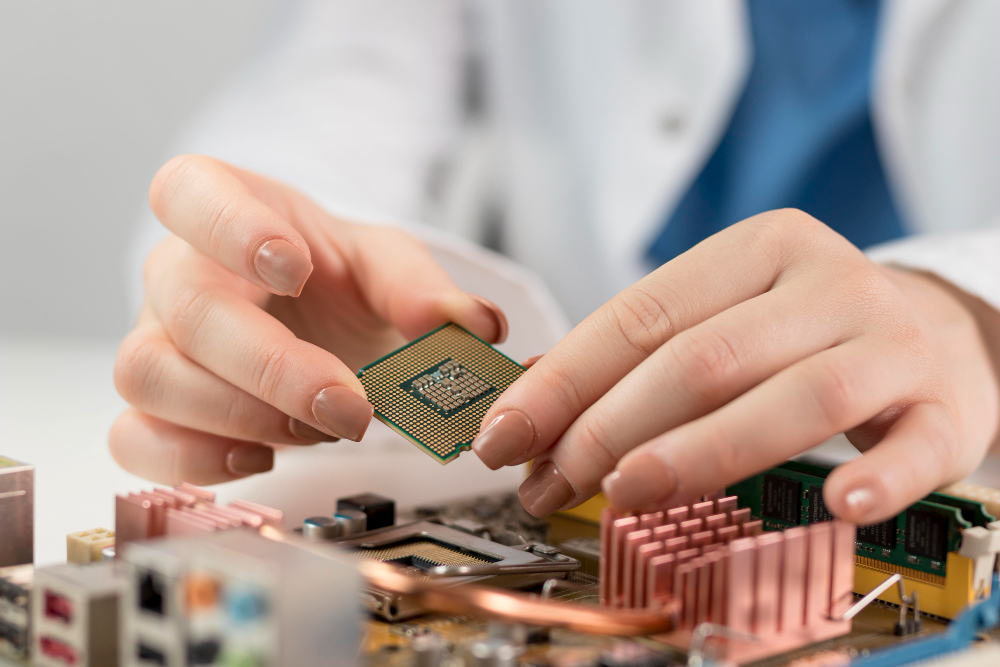
The global technology landscape is currently defined by a single, critical resource: the semiconductor. Often called the “oil of the 21st century,” these microscopic chips power everything from smartphones and electric vehicles to advanced military systems and artificial intelligence. At the center of the geopolitical storm surrounding this resource is China, a nation that has embarked on one of the most ambitious industrial transformation projects in modern history. Understanding China’s semiconductor industry development plan is not merely an exercise in tracking corporate growth; it is essential for comprehending the future balance of global economic and technological power.
For decades, China served as the world’s factory, assembling devices designed and chipped elsewhere. However, a strategic pivot toward self-sufficiency has reshaped national priorities. The driving force behind this shift is a comprehensive, multi-layered development plan aimed at reducing reliance on foreign technology, particularly from the United States and its allies. This journey involves massive state capital, aggressive talent acquisition, and a restructuring of the entire supply chain, from raw materials to final packaging. The stakes are incredibly high, with national security and economic sovereignty hanging in the balance.
The Strategic Imperative: Why Self-Sufficiency Matters
The catalyst for China’s accelerated push into semiconductor independence was not purely organic market evolution but a convergence of geopolitical friction and supply chain vulnerabilities. Historically, China imported more integrated circuits than oil, spending hundreds of billions of dollars annually on foreign chips. This dependency created a significant strategic weakness. When trade tensions escalated and export controls were tightened by the U.S. Department of Commerce, restricting access to advanced lithography machines and design software, the urgency for a domestic solution became paramount.
The core of the strategy is encapsulated in the “Made in China 2025” initiative, which set explicit targets for domestic content in core components, including semiconductors. Although the specific branding of the initiative has sometimes been downplayed in international discourse to reduce friction, the policy mechanisms remain robust and active. The goal is clear: to achieve a 70% self-sufficiency rate in chip production by 2025, a target that has driven unprecedented investment levels across the sector. Analysts at the Semiconductor Industry Association frequently highlight how such state-directed goals alter global market dynamics, forcing competitors to rethink their own supply chain strategies.
This drive for autonomy is also deeply rooted in national security considerations. Modern defense systems, surveillance networks, and critical infrastructure rely heavily on advanced processing power. Relying on potential adversaries for these components is viewed as an unacceptable risk. Consequently, the development plan prioritizes not just commercial viability but the creation of a secure, indigenous supply chain that can withstand external sanctions. The Center for Strategic and International Studies (CSIS) provides extensive analysis on how these security concerns drive industrial policy, noting that the decoupling of tech supply chains is likely a long-term structural shift rather than a temporary diplomatic dispute.
Furthermore, the economic implications extend beyond mere import substitution. By mastering semiconductor manufacturing, China aims to move up the value chain, capturing the high margins associated with chip design and fabrication rather than remaining confined to low-margin assembly. This transition is vital for sustaining economic growth as labor costs rise and the demographic dividend wanes. The World Bank has often discussed the necessity for emerging economies to transition to high-tech manufacturing to avoid the “middle-income trap,” and semiconductors represent the apex of this transition.
The Policy Engine: Funding and Government Support
No industrial transformation of this magnitude occurs without substantial financial backing. China’s approach distinguishes itself through the sheer scale and structure of its government funding mechanisms. The centerpiece of this financial architecture is the National Integrated Circuit Industry Investment Fund, commonly known as the “Big Fund.” Established in 2014 and followed by subsequent phases, this state-backed vehicle pools capital from government sources, state-owned enterprises, and private investors to inject liquidity into critical areas of the supply chain.
The Big Fund operates with a strategic focus, directing capital not just to fab operators but also to equipment manufacturers, material suppliers, and design houses. This holistic approach recognizes that a semiconductor ecosystem is only as strong as its weakest link. If a country can design a chip but lacks the lithography machines to print it, or the photoresists to coat the wafer, the entire endeavor stalls. Reports from Bloomberg Technology often detail the specific tranches of funding released by the Big Fund, highlighting shifts in strategy from supporting mature nodes to attacking advanced packaging and equipment bottlenecks.
In addition to direct equity investment, the government employs a wide array of fiscal incentives. These include tax holidays for qualified enterprises, subsidies for research and development, and preferential land use policies for building new fabrication plants. Local governments in hubs like Shanghai, Beijing, and Shenzhen often compete to attract semiconductor projects by offering additional layers of support, creating a fertile environment for rapid expansion. The International Monetary Fund (IMF) has analyzed these subsidy structures, noting their impact on global overcapacity concerns and the distortion of free-market pricing mechanisms in certain segments of the industry.
Talent development is another pillar of the policy engine. Recognizing a severe shortage of experienced engineers and process specialists, the government has launched initiatives to recruit top global talent and expand domestic education programs. Universities are partnering with industry leaders to create specialized curricula, while generous packages are offered to attract experts from Taiwan, South Korea, and the United States. The Institute of Electrical and Electronics Engineers (IEEE) frequently publishes papers on the global flow of engineering talent, observing how China’s targeted recruitment is gradually building a critical mass of human capital necessary for complex process node development.
The coordination between central planning and local execution is a defining feature of China’s model. While the central government sets the broad strategic direction and provides the bulk of the capital, provincial and municipal authorities are tasked with implementation. This decentralized execution allows for experimentation and rapid scaling but can sometimes lead to fragmented efforts or redundant projects. However, recent policy adjustments have sought to consolidate resources and focus on key players to ensure efficiency. The Peterson Institute for International Economics (PIIE) offers critical perspectives on the effectiveness of these industrial policies, debating whether state-led models can truly replicate the innovation cycles seen in market-driven ecosystems.
Mapping the Supply Chain: Design, Fabrication, and Equipment
To understand the depth of China’s development plan, one must dissect the semiconductor supply chain into its primary components: design, fabrication, and equipment/materials. Each segment presents unique challenges and has seen distinct levels of progress under the national strategy.
In the realm of chip design, China has made perhaps the most visible strides. Companies like Huawei’s HiSilicon demonstrated before recent sanctions that Chinese firms could design world-class processors comparable to those from Apple or Qualcomm. The design sector benefits from lower barriers to entry compared to manufacturing, as it relies heavily on intellectual property and software tools rather than billion-dollar physical plants. However, the reliance on Electronic Design Automation (EDA) software, dominated by U.S. firms like Synopsys and Cadence, remains a vulnerability. In response, domestic EDA providers are receiving massive support to develop homegrown alternatives. Insights from Gartner suggest that while domestic EDA tools are currently limited to specific niches, the gap is narrowing through aggressive R&D and acquisitions.
Fabrication, or the actual manufacturing of chips on silicon wafers, represents the most capital-intensive and technologically complex hurdle. Semiconductor Manufacturing International Corporation (SMIC) stands as the flagship of China’s foundry ambitions. While SMIC has successfully mastered mature nodes (28nm and above), which are crucial for automotive, IoT, and power management applications, breaking into the advanced nodes (7nm and below) required for high-end smartphones and AI accelerators has proven difficult due to equipment restrictions. Despite these headwinds, unexpected breakthroughs have occurred, signaling that alternative process flows and creative engineering are being employed to bypass limitations. Analysis from TechInsights often dissects these chips, revealing the innovative, albeit costly, methods used to achieve advanced performance without access to the latest extreme ultraviolet (EUV) lithography machines.
The equipment and materials sector is arguably the most critical bottleneck and the current focal point of intense investment. Making a chip requires a symphony of highly specialized machines: lithography scanners, etching tools, deposition systems, and inspection equipment. Historically, this domain has been dominated by companies like ASML (Netherlands), Applied Materials (USA), and Tokyo Electron (Japan). China’s development plan prioritizes the indigenization of this hardware. Companies like Naura Technology and AMEC (Advanced Micro-Fabrication Equipment) are rapidly expanding their portfolios. While they may not yet match the cutting-edge capabilities of their Western counterparts, they are increasingly competent in mature node equipment, allowing domestic fabs to expand capacity even when foreign vendors are restricted. The Responsible Business Alliance also notes the increasing complexity of supply chain compliance as equipment sourcing becomes more fragmented.
Materials science forms the foundation of this entire pyramid. From silicon wafers to photoresists, gases, and slurries, the quality of raw materials dictates the yield and performance of the final chip. Japan currently holds a near-monopoly on many high-end semiconductor materials. China’s plan includes a robust push to localize material production, with numerous startups and state-backed ventures focusing on purifying silicon and developing advanced chemical compounds. Progress here is slower due to the rigorous validation processes required by chipmakers, but the trajectory is upward. Data from Statista illustrates the growing market share of Chinese material suppliers, indicating a gradual but steady shift in the global supply base.
Navigating Geopolitical Headwinds and Export Controls
The path of China’s semiconductor ascent is fraught with external obstacles, primarily in the form of export controls and diplomatic pressure. The United States, joined by allies such as the Netherlands and Japan, has implemented a tightening web of restrictions designed to slow China’s progress in advanced computing and military applications. These measures include bans on the sale of EUV lithography machines, restrictions on high-bandwidth memory, and limits on the export of AI-specific chips.
These controls have forced a recalibration of China’s development plan. The immediate effect was a shock to the system, disrupting supply chains and halting certain advanced projects. However, the longer-term consequence has been a surge in determination and a “siege mentality” that galvanizes domestic investment. The restrictions have effectively removed the option of buying advanced technology, leaving indigenous innovation as the only viable path forward. This dynamic is often described as the “Sputnik moment” for China’s tech sector, prompting a unified national effort similar to the space race era. Commentary from the Council on Foreign Relations highlights how these containment strategies, while slowing progress, may inadvertently accelerate China’s long-term self-reliance by eliminating dependency habits.
The geopolitical landscape also influences global collaboration. International companies face a dilemma: comply with export controls and lose access to the vast Chinese market, or find ways to navigate the regulations while maintaining business relationships. Some firms are developing “China-specific” versions of their products that comply with restrictions while still serving commercial needs. Others are shifting manufacturing capacity outside of China to mitigate risk. This fragmentation of the global semiconductor ecosystem leads to inefficiencies and higher costs for everyone. The Brookings Institution frequently explores these geopolitical fractures, arguing that a bifurcated global tech standard could emerge, with one ecosystem led by the U.S. and another by China.
Sanctions on specific entities, such as Huawei and SMIC, have further complicated the picture. Being placed on the Entity List restricts these companies from accessing U.S. technology without a license, severely impacting their ability to produce advanced chips. Yet, these companies have responded with remarkable resilience, re-architecting their supply chains and investing heavily in domestic alternatives. The survival and continued innovation of these sanctioned entities serve as a proof of concept for the broader development plan, demonstrating that isolation, while painful, is not fatal.
Moreover, the diplomatic pressure extends to third-party countries. The U.S. has actively lobbied nations like the Netherlands to restrict ASML from servicing existing machines in China, not just selling new ones. This escalation raises the stakes and forces China to accelerate its maintenance and repair capabilities for existing equipment, another area where domestic firms are stepping up. The complexity of maintaining high-tech machinery without original manufacturer support requires deep reverse-engineering skills, fostering a new layer of technical expertise within the country.
Market Dynamics and the Road Ahead
The interplay between state planning and market forces creates a unique dynamic in China’s semiconductor sector. While the government provides the capital and direction, the ultimate success of the development plan depends on commercial viability. Chips must be competitive in terms of cost, performance, and power efficiency to be adopted by global and domestic customers. There is a risk that heavy subsidies could lead to the survival of inefficient “zombie” companies that rely on state handouts rather than innovation. To counter this, recent policy shifts emphasize consolidation and the nurturing of national champions capable of competing globally.
The demand side of the equation remains a powerful tailwind. China is the world’s largest consumer of semiconductors, driven by its massive electronics manufacturing base, the rapid adoption of electric vehicles, and the rollout of 5G infrastructure. This internal demand provides a ready market for domestic producers, allowing them to iterate and improve their processes even if their technology initially lags behind global leaders. The concept of “import substitution” is no longer just a policy goal but a market reality, as Chinese OEMs increasingly prefer domestic suppliers to mitigate their own supply chain risks.
Looking ahead, the focus is likely to shift towards heterogeneous integration and advanced packaging. As shrinking transistors becomes physically harder and more expensive, stacking chips and connecting them in novel ways offers a path to increased performance without needing the absolute smallest node. China is investing heavily in these packaging technologies, where the barriers to entry are slightly lower than in front-end lithography. This strategic pivot could allow Chinese firms to deliver high-performance solutions using mature nodes, effectively circumventing some of the restrictions on advanced manufacturing.
The global implications of China’s success or failure in this endeavor are profound. If China achieves a high degree of self-sufficiency, it could flood the global market with affordable chips, disrupting the business models of established players in the U.S., Europe, and Asia. Conversely, if the technological gap remains insurmountable due to sustained restrictions, China’s tech growth could plateau, impacting global innovation rates. Most experts believe the reality will lie somewhere in between: China will likely dominate the mature node market while struggling to catch up in the bleeding edge, leading to a bifurcated industry structure.
| Feature | Pre-2018 Status | Current Trajectory (2026 Outlook) | Key Challenges Remaining |
|---|---|---|---|
| Design Capability | Emerging, reliant on foreign IP/EDA | Advanced designs exist; domestic EDA gaining ground | Full-stack EDA independence; IP core diversity |
| Fabrication Nodes | Dominated by mature nodes (>28nm) | Mass production at 7nm (niche); mature node expansion | Yield rates at advanced nodes; EUV access |
| Equipment | Heavy reliance on US/Japan/EU imports | Domestic tools covering >30% of mature line needs | Lithography source availability; precision metrology |
| Materials | <10% domestic sourcing | Rapidly increasing localization for chemicals/wafers | High-purity photoresists; specialty gases |
| Funding Model | Fragmented local subsidies | Centralized “Big Fund” + local matching + private equity | Capital efficiency; avoiding overcapacity bubbles |
| Talent Pool | Severe shortage of experienced engineers | Growing domestic graduates + repatriated experts | Retention of top-tier process architects |
| Global Integration | Deeply integrated into global supply chain | Increasingly dual-circulation (domestic + selective global) | Compliance with evolving export controls |
| Innovation Focus | Process imitation and scaling | Architectural innovation & advanced packaging | Fundamental materials science breakthroughs |
Frequently Asked Questions
What is the primary goal of China’s semiconductor development plan?
The primary goal is to achieve a high degree of self-sufficiency in semiconductor design, manufacturing, and equipment to reduce reliance on foreign technology, particularly from the United States. This is driven by both economic ambitions to capture high-value manufacturing sectors and national security concerns regarding supply chain vulnerabilities.
How much money has China invested in its semiconductor industry?
While exact figures vary due to the mix of central and local funding, estimates suggest that hundreds of billions of dollars have been committed through the National Integrated Circuit Industry Investment Fund (Big Fund) and various local government guidance funds. This makes it one of the largest state-backed industrial initiatives in history.
Can China manufacture advanced 5nm or 3nm chips?
Currently, mass production of cutting-edge 5nm or 3nm chips is severely hindered by the lack of access to Extreme Ultraviolet (EUV) lithography machines, which are blocked by export controls. However, Chinese firms are utilizing creative multi-patterning techniques with older Deep Ultraviolet (DUV) machines to produce 7nm class chips, though at higher costs and lower yields.
What role does the “Big Fund” play?
The Big Fund acts as a state-backed venture capital vehicle that invests directly in semiconductor companies across the supply chain. It provides the massive capital expenditure required for building fabs and funds R&D for equipment and materials, de-risking investments for private stakeholders and ensuring strategic alignment with national goals.
How do US export controls affect China’s progress?
Export controls restrict China’s access to the most advanced manufacturing equipment, design software, and high-performance chips. While this slows down the pace of advancement in leading-edge nodes, it has simultaneously accelerated domestic R&D efforts and forced the creation of a parallel, indigenous supply chain.
Is China focusing only on advanced chips?
No, a significant portion of the strategy focuses on mature nodes (28nm and larger). These chips are essential for automobiles, industrial equipment, power management, and consumer electronics. China aims to dominate the global market for these mature chips, which represent a large volume of total semiconductor consumption.
What is the status of domestic semiconductor equipment manufacturers?
Domestic equipment makers like Naura and AMEC have made significant strides, particularly in etching, cleaning, and deposition tools for mature nodes. While they still lag in lithography, their market share within China is growing rapidly as fabs seek to diversify away from foreign suppliers.
How does talent acquisition fit into the plan?
Talent is considered a critical bottleneck. The government is heavily investing in university programs, vocational training, and incentives to attract overseas Chinese engineers back to the mainland. Building a deep bench of experienced process engineers is viewed as equally important as acquiring hardware.
Will China’s semiconductor industry become completely decoupled from the world?
Complete decoupling is unlikely and economically inefficient. While China seeks self-sufficiency in critical areas, it will likely remain part of the global ecosystem for non-sensitive technologies and mature nodes. The trend is moving towards a “dual circulation” model where critical supply chains are domestic, while general commerce continues globally.
What are the risks associated with this development plan?
Risks include the potential for massive capital misallocation leading to wasted resources, the difficulty of replicating complex global supply chains in isolation, and the possibility that technological gaps in fundamental materials and equipment may persist longer than anticipated despite heavy investment.
Conclusion: The Long Game of Technological Sovereignty
China’s semiconductor industry development plan represents a definitive shift in the global technological order. It is a testament to the power of state-directed capitalism when applied with singular focus and immense resources. The journey from a net importer of chips to a potential self-sufficient powerhouse is fraught with technical hurdles, geopolitical friction, and economic uncertainties. Yet, the trajectory is unmistakable. Through the coordinated efforts of the Big Fund, the resilience of companies like SMIC and Huawei, and the relentless pursuit of talent and innovation, China is systematically dismantling its dependencies.
The road ahead will not be linear. Breakthroughs in lithography and materials science take time, and the moving target of international sanctions ensures that the goalposts will continue to shift. However, the sheer scale of the domestic market provides a buffer that few other nations possess, allowing Chinese firms to iterate, fail, and improve within a protected environment. The focus on mature nodes ensures immediate economic relevance, while the long-term bets on advanced packaging and alternative architectures offer a pathway to bypass traditional bottlenecks.
For the rest of the world, the rise of a independent Chinese semiconductor ecosystem signals the end of a unified global tech supply chain. It heralds an era of duplication, where parallel ecosystems evolve with different standards, suppliers, and strategic imperatives. This fragmentation brings challenges in terms of efficiency and cost but also drives a new wave of innovation as competition intensifies. Ultimately, China’s quest for chip sovereignty is not just about making silicon; it is about securing its place as a dominant architect of the future digital economy. The outcome of this monumental endeavor will define the technological balance of power for decades to come, reshaping industries from automotive to artificial intelligence and redefining the rules of global trade.