The Great Leap Forward: China's Radical Experiment and Its Consequences
What Was the Great Leap Forward?
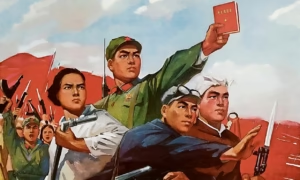
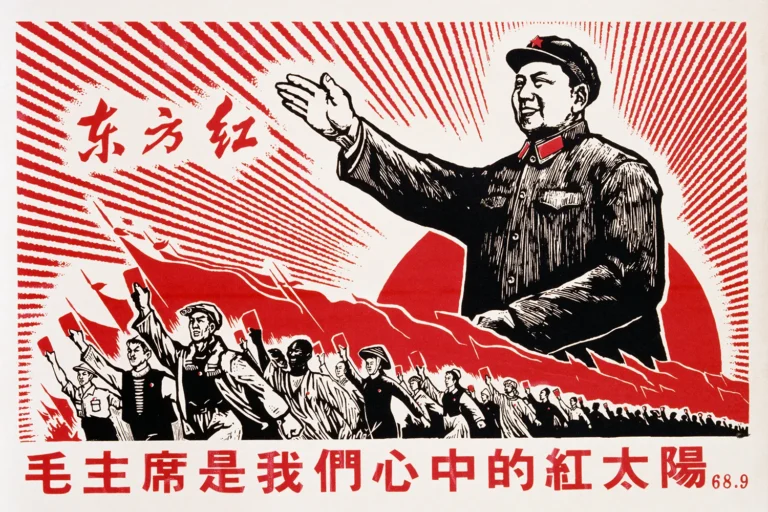
The Great Leap Forward (1958–1962) was a radical socio-economic campaign initiated by Chairman Mao Zedong of the Chinese Communist Party (CCP). Its goal was to transform China from an agrarian society into a modern, industrialized communist nation in a very short time. The campaign sought to rapidly boost agricultural and industrial production by mobilizing China’s vast rural population into people’s communes and launching ambitious projects like backyard furnaces and massive irrigation works.
However, the Great Leap Forward resulted in one of the deadliest famines in human history, with an estimated 15 to 45 million deaths. The policy failures, poor planning, and political repression led to a catastrophic collapse in food production and widespread suffering across China.
Historical Context: Why Was the Great Leap Forward Launched?
After the founding of the People’s Republic of China in 1949, Mao and the CCP aimed to reshape Chinese society through socialist policies modeled in part on the Soviet Union. By the mid-1950s, the government had completed land reforms and began to collectivize agriculture.
However, Mao was not satisfied with the pace of progress. Influenced by his belief in mass mobilization and class struggle, Mao announced the Great Leap Forward in 1958 as a way to bypass traditional industrial development methods and leap straight into socialism.
Mao believed that if the Chinese people worked together with revolutionary enthusiasm, they could outperform Western industrial nations in just a few years.
Key Features of the Great Leap Forward
1. People’s Communes
Communes were large collective farming units combining several villages, often with tens of thousands of people.
Private property, family kitchens, and markets were abolished.
All aspects of life—agriculture, education, child-rearing, even meals—were organized communally.
Labor was heavily regimented and assigned by commune leaders.
Purpose: To improve efficiency and foster socialist values of cooperation and equality.
Result: Poor management and lack of incentives led to lower productivity, disorganization, and widespread resentment.
2. Backyard Furnaces and Steel Production
easants were encouraged to build backyard furnaces to produce steel from scrap metal.
The government set unrealistic steel production quotas.
Villagers melted down tools, pots, and even bicycles to meet targets.
The result was low-quality, unusable pig iron rather than usable steel.
Result: Resources were wasted, agricultural work was neglected, and the economy suffered.

3. Agricultural Reforms and Falsified Reporting
Local cadres exaggerated grain output to impress higher authorities.
The state requisitioned grain based on inflated production figures, leaving too little for peasants to survive.
New agricultural techniques, such as close planting and deep plowing (inspired by Soviet pseudoscience), failed disastrously.
Result: A significant drop in food production led to famine across large parts of rural China.

The Famine: A National Catastrophe
Between 1959 and 1961, China experienced a massive famine. Crops failed, food was diverted to cities or exports, and the rural population starved.
Worst-hit provinces included Anhui, Henan, Sichuan, and Shandong.
There were reports of starvation, disease, mass displacement, and even cannibalism in extreme cases.
Many deaths were not just from hunger but also from overwork, exposure, and persecution.
Estimates of the death toll range from:
15 million (official Chinese government figures)
Up to 45 million (independent historians, including Frank Dikötter)
Political and Social Consequences
1. Blame and Political Fallout
As the scale of the disaster became undeniable, Mao began to lose political influence.
In 1962, Mao stepped back from direct control, and more pragmatic leaders like Liu Shaoqi and Deng Xiaoping implemented reforms.
Liu called the Great Leap Forward a “man-made disaster.”
2. Suppression of Dissent
Speaking out against the campaign was dangerous.
Many who criticized policies or reported the truth were labeled counter-revolutionaries and persecuted.
The lack of feedback and suppression of criticism were major reasons the policy failures persisted.
Reforms After the Great Leap Forward
After 1962, China shifted toward more pragmatic economic policies. Key changes included:
Decollectivization: Communes were made more flexible, and household plots were returned to families.
Incentive structures: Families could keep surplus produce and sell it in local markets.
Central planning was adjusted to reflect more realistic goals.
These reforms temporarily improved agricultural output and stabilized the economy until the onset of the Cultural Revolution in 1966, which again disrupted China’s social and economic systems.
Legacy of the Great Leap Forward
The Great Leap Forward remains a sensitive and controversial topic in China.
Historical Lessons
Centralized planning without accountability can have devastating consequences.
Ideological rigidity and political repression prevent the correction of policy errors.
The importance of accurate data and grassroots feedback in governance.
Today
The Chinese government rarely acknowledges the full scope of the famine.
Discussions are often censored or limited in official narratives.
Historians around the world continue to study and debate the causes and consequences of the Great Leap Forward.
Conclusion
The Great Leap Forward was one of the most ambitious and tragic social experiments in modern history. It aimed to propel China into a new era but instead led to economic failure, mass starvation, and immense human suffering. Understanding this period is crucial to comprehending modern China’s political history and the enduring tension between ideology and practicality in Chinese policymaking.