Qingming Festival: Traditions, History, and Cultural Meaning
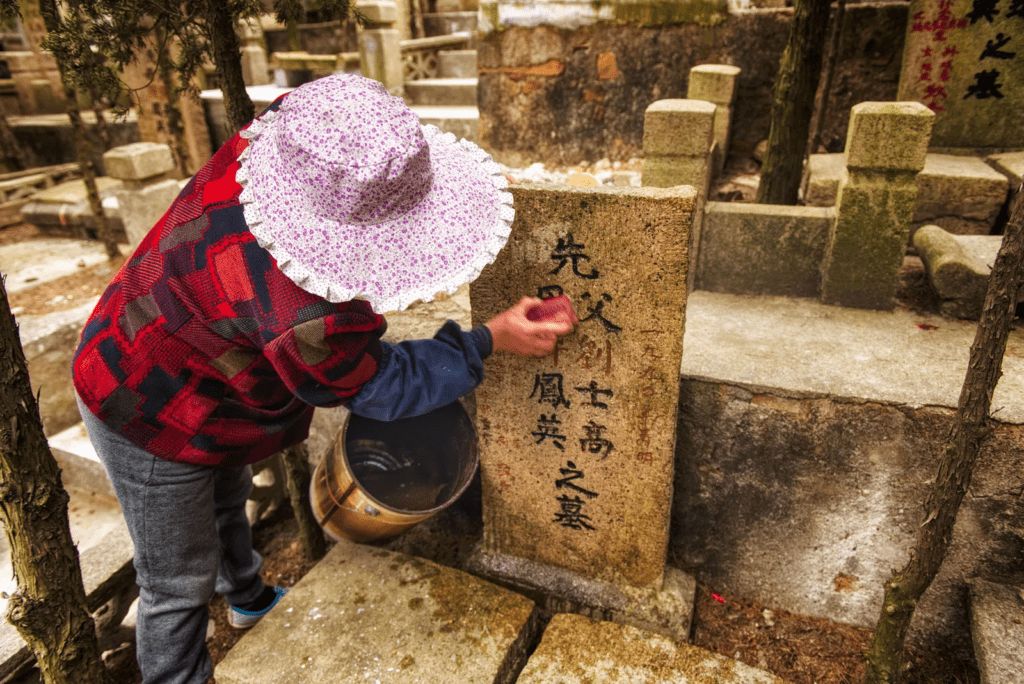
Qingming Festival, also known as Tomb-Sweeping Day, is a traditional Chinese festival dedicated to honoring ancestors, remembering the deceased, and celebrating the arrival of spring. Observed in early April each year, Qingming blends remembrance rituals with seasonal renewal, reflecting the deep connection in Chinese culture between family lineage, nature, and moral continuity.
The festival is both solemn and life-affirming: families clean ancestral graves while also enjoying outdoor activities that mark the changing season.
When Is Qingming Festival?
In modern China, it is recognized as a public holiday, allowing families time to travel and participate in ancestral rites.
Qingming falls on April 4th, 5th, or occasionally April 6th, depending on the solar calendar. Unlike many traditional Chinese holidays based on the lunar calendar, Qingming is determined by the traditional 24 solar terms system, which guides agricultural activity.
Historical Origins
The roots of Qingming trace back over 2,500 years. The festival is commonly linked to the legend of Jie Zitui, a loyal retainer during the Spring and Autumn period. According to tradition, Jie refused rewards for his loyalty and later died in a fire set by his ruler. The ruler, filled with remorse, established a day of remembrance that eventually evolved into Qingming observances.
Over centuries, Qingming merged with existing spring rituals associated with agricultural renewal, creating a festival that combines mourning with seasonal celebration.
Core Traditions and Practices
Tomb Sweeping
This practice reflects the Confucian value of filial piety — respect and responsibility toward parents and ancestors. By maintaining ancestral graves, families reaffirm continuity between generations.
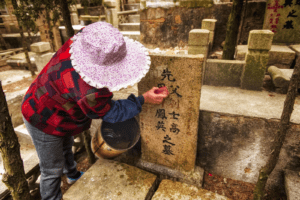
The most important Qingming ritual is the cleaning of family graves. Families remove weeds, sweep tombstones, repair structures, and present offerings such as fruit, tea, wine, and symbolic paper goods.
Offerings and Ritual Items
Burning joss paper (symbolic money or goods) represents providing for ancestors in the afterlife. In modern times, some communities encourage environmentally conscious alternatives to reduce fire risk and pollution.
Spring Outings
Qingming is also associated with treading on greenery, or spring excursions. Families may picnic, fly kites, or enjoy blossoming landscapes. This dual emphasis on remembrance and renewal symbolizes the balance between life and death in traditional Chinese thought.
Cultural and Philosophical Significance
Qingming embodies several enduring themes in Chinese civilization:
Filial piety
Ancestor veneration is central to Confucian ethics. Remembering the deceased reinforces moral duty and family cohesion.
Continuity of lineage
Chinese identity historically emphasizes ancestral heritage and collective memory rather than purely individual identity.
Harmony with nature
Because Qingming coincides with spring renewal, it reflects the integration of human ritual with seasonal cycles.
These values continue to influence Chinese society, even amid modernization and urbanization.
Qingming in Modern China
Today, Qingming remains widely observed across mainland China, Taiwan, Hong Kong, and Chinese communities abroad. Urban families may travel long distances to ancestral hometowns. Digital memorial platforms have also emerged, allowing virtual offerings and online remembrance.
The holiday also highlights the social importance of family reunions in contemporary China, where internal migration often separates relatives for work.
In addition to its domestic significance, Qingming has been recognized as part of China’s intangible cultural heritage, underscoring its enduring cultural importance.
Regional Variations
While tomb sweeping is universal, customs vary by region:
In southern China, special cold foods are traditionally eaten, reflecting earlier “Cold Food Festival” influences.
In northern regions, kite flying is particularly popular, sometimes with lanterns attached to kites flown at night.
Some areas incorporate local opera or community ceremonies.
These variations reflect the geographic and cultural diversity within China.
Comparisons with Other Ancestor Festivals
Qingming shares similarities with other global remembrance traditions, such as Japan’s Obon Festival or Mexico’s Día de los Muertos. However, Qingming is distinctive in its combination of grave maintenance, Confucian ethics, and solar calendar timing linked to agriculture.
Conclusion
Qingming Festival is more than a day of mourning; it is a cultural expression of continuity, memory, and renewal. By honoring ancestors while embracing the vitality of spring, the festival reflects core elements of Chinese civilization: respect for lineage, social responsibility, and harmony with nature.
Even in a rapidly modernizing society, Qingming remains a powerful reminder that the past and present are deeply interconnected in Chinese cultural life.