China’s Economy: Structure, Growth Model, and Global Impact
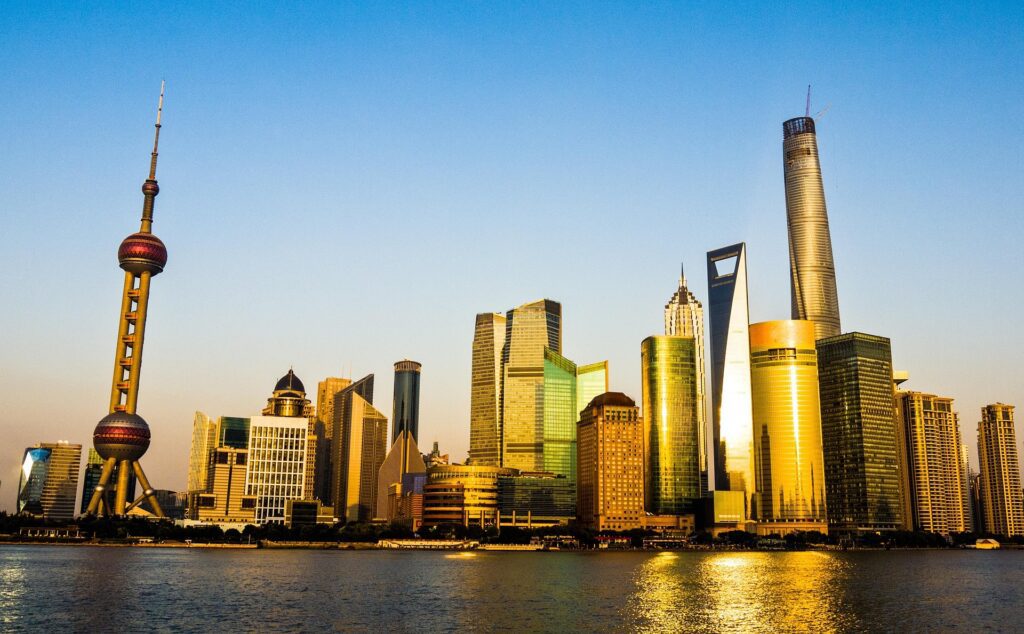
China’s economy is the second largest in the world by nominal GDP and the largest by purchasing power parity. Over the past four decades, it has transformed from a centrally planned system into a hybrid model that combines state direction with market mechanisms.
Yet China’s economic story is not simply one of rapid growth. It is a case study in structural transformation: from rural collectivism to industrial powerhouse, from export dependency to technological ambition, and from demographic dividend to structural headwinds.
Understanding China’s economy requires examining its historical foundations, institutional structure, growth model, emerging challenges, and global implications.
Historical Foundations of Modern Growth
The economic system of the People’s Republic of China was originally modeled on Soviet-style central planning after 1949. Private enterprise was largely eliminated, agriculture was collectivized, and production targets were state-directed.
This approach changed dramatically in 1978 under Deng Xiaoping’s reform and opening period. Market incentives were gradually introduced, Special Economic Zones were created, and foreign investment was encouraged. Rather than abandoning state control entirely, China adopted what it calls a “socialist market economy” — allowing markets to allocate resources while preserving political control under the Communist Party.
The result was one of the fastest sustained growth periods in modern economic history.
Structure of China’s Economic System
China’s economy today operates under a hybrid model with three major pillars:
State-Owned Enterprises (SOEs)
Large firms in strategic sectors such as energy, telecommunications, finance, and defense remain under state ownership or control. These firms receive policy support and often play roles beyond profit maximization, including employment stability and strategic development.
Private Sector
The private sector drives much of China’s innovation, manufacturing, and consumer economy. Companies in technology, e-commerce, and services have expanded rapidly since the 1990s, contributing significantly to employment and GDP.
Local Government Financing
Local governments play a central role in infrastructure investment and land development. Much of China’s rapid urbanization was financed through land sales and local borrowing, creating both growth and long-term fiscal risks.
This mixed structure allows flexibility while preserving centralized oversight.
The Export-Led Growth Model
For decades, China relied heavily on exports and manufacturing as engines of growth. Low labor costs, infrastructure investment, and integration into global supply chains made China the “world’s factory.”
Entry into the World Trade Organization in 2001 accelerated export expansion. Manufacturing clusters emerged across coastal provinces, producing electronics, machinery, textiles, and consumer goods for global markets.
However, rising wages, trade tensions, and global economic shifts have pushed China to rebalance toward domestic consumption and higher-value industries.
Urbanization and Infrastructure
China’s economic expansion was closely tied to rapid urbanization. Hundreds of millions moved from rural areas to cities, supporting construction, manufacturing, and service growth.
Massive infrastructure projects — highways, high-speed rail networks, ports, and airports — improved productivity and connectivity. These investments boosted short-term GDP but also contributed to rising debt levels, particularly at the local government level.
Urban development remains central to China’s growth strategy, though its pace has slowed in recent years.
Technology and Industrial Upgrading
In recent years, China has shifted focus toward technological self-reliance and advanced manufacturing. Strategic sectors include:
- Semiconductors
- Artificial intelligence
- Electric vehicles
- Renewable energy
- Telecommunications infrastructure
Government initiatives promote domestic innovation to reduce dependence on foreign supply chains. Export controls and technology restrictions from advanced economies have intensified this push.
The transition from labor-intensive manufacturing to innovation-driven growth represents one of the most significant structural changes in China’s economy.
The Property Sector and Financial Risks
Real estate has played an outsized role in China’s economic model. Property development fueled local government revenue, household wealth accumulation, and construction employment.
However, high leverage among developers and slowing demand have exposed vulnerabilities. Financial stress in the property sector has raised concerns about debt sustainability and economic stability.
Managing this transition without triggering systemic financial instability remains a major policy challenge.
Demographics and Long-Term Pressures
China’s demographic structure is shifting rapidly. The working-age population has begun to decline, and the country faces an aging population due to decades of low birth rates.
This demographic transition affects:
- Labor supply
- Pension sustainability
- Healthcare systems
- Productivity growth
As a result, China must increasingly rely on technological advancement and productivity improvements rather than labor expansion to sustain growth.
Consumption and the Middle Class
China’s expanding middle class has driven growth in services, e-commerce, digital payments, and consumer goods. Domestic consumption now plays a larger role than in earlier export-led decades.
However, household savings rates remain relatively high due to limited social safety nets and uncertainty about long-term stability. Strengthening domestic demand is a key objective of economic policy.
China’s Role in the Global Economy
China is deeply integrated into global trade networks. It is a major trading partner for countries across Asia, Europe, Africa, and Latin America.
Its economic influence extends through:
- Supply chain integration
- Overseas infrastructure investment
- Commodity demand
- Currency policy
- Manufacturing capacity
Global markets are increasingly sensitive to shifts in China’s growth rate, regulatory decisions, and trade policy.
China’s economic size means that domestic adjustments often have international consequences.
Structural Drivers of China’s Economic Policy
Several long-term priorities shape economic decision-making:
- Stability: Economic volatility is viewed as a political risk. Growth management is closely tied to social cohesion.
- Strategic autonomy: Reducing reliance on foreign technology and capital is seen as essential to national security.
- Long-term planning: Five-Year Plans and industrial strategies guide development goals, emphasizing continuity over short-term fluctuations.
- Balanced development: Reducing inequality between urban and rural regions remains a persistent policy focus.
These structural drivers explain why China’s economic reforms proceed gradually and within defined political boundaries.
Key Challenges Facing China’s Economy
- Slower growth compared to earlier decades
- High debt levels in local governments and property markets
- Demographic aging
- External trade pressures
- Geopolitical technology competition
The central question is whether China can transition from investment-heavy growth to innovation-driven, consumption-led expansion without significant disruption.
Conclusion
China’s economy represents one of the most significant transformations in modern history. From central planning to a hybrid market system, from rural poverty to industrial powerhouse, the country has reshaped global production and trade patterns.
Today, China stands at a structural crossroads. Its future growth will depend less on rapid expansion and more on productivity, technological capability, financial stability, and demographic adaptation.
Understanding China’s economic model is essential for interpreting global markets, geopolitical competition, and the evolving balance of economic power in the 21st century.