
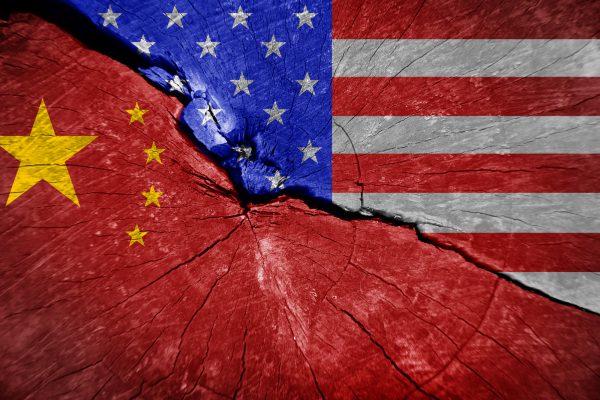
The global economic landscape is currently defined by a singular, overarching dynamic: the strategic competition between the United States and the People’s Republic of China. This is not merely a trade dispute or a temporary friction over tariffs; it represents a fundamental restructuring of how the world produces, consumes, and innovates. For decades, the prevailing narrative suggested that economic integration would lead to political convergence, a theory that has largely been dismantled by the realities of the last ten years. Today, the relationship is characterized by a complex mix of interdependence and intense rivalry, often described by analysts as “strategic decoupling” or “de-risking.” Understanding this competition requires looking beyond headline numbers to examine the structural shifts in supply chains, the race for technological supremacy, and the divergent economic models that drive both nations.
Divergent Economic Models: State Capitalism vs. Market Liberalism
At the heart of the competition lies a clash of economic philosophies. The United States operates primarily on a model of market liberalism, where private enterprise drives innovation, capital allocation is largely determined by market forces, and the government’s role is traditionally limited to regulation and the enforcement of contracts. While recent years have seen a shift toward more active industrial policy in Washington, the core engine of the U.S. economy remains the private sector, fueled by deep capital markets and a culture of entrepreneurial risk-taking. Data from the World Bank consistently highlights how U.S. productivity gains are closely tied to private sector efficiency and technological adoption.
In contrast, China employs a system often termed “state capitalism” or a “socialist market economy.” In this model, the state retains significant control over strategic sectors, directs credit through state-owned banks, and utilizes five-year plans to guide national development goals. The Chinese Communist Party (CCP) maintains a pervasive influence over both state-owned enterprises (SOEs) and private companies, ensuring that corporate strategies align with national security and geopolitical objectives. This allows Beijing to mobilize resources rapidly for large-scale infrastructure projects or targeted industry subsidies, a capability that Western market economies often struggle to match. The International Monetary Fund (IMF) frequently analyzes these structural differences, noting how China’s state-directed approach has facilitated rapid industrialization but also led to issues regarding debt sustainability and resource misallocation.
The friction arises because these two systems operate on different rule sets within the same global marketplace. American companies often argue that Chinese state subsidies create an uneven playing field, allowing Chinese firms to undercut prices globally regardless of profitability. Conversely, Chinese leadership views the U.S. emphasis on free markets as a mechanism to maintain Western hegemony, arguing that every major economy utilizes some form of industrial policy. This philosophical divide complicates trade negotiations, as agreements reached under one set of assumptions often collapse when confronted with the reality of the other system’s operational logic. The Peterson Institute for International Economics (PIIE) provides extensive research on how these structural incompatibilities drive long-term trade tensions.
The Technology War: Semiconductors and AI Dominance
Nowhere is the competition more fierce than in the realm of advanced technology. Both nations recognize that leadership in artificial intelligence (AI), quantum computing, and semiconductors will define economic and military power in the 21st century. The semiconductor industry, in particular, has become the epicenter of this struggle. Chips are the “oil” of the digital age, powering everything from smartphones to missile guidance systems. The United States has responded to China’s ambitions by implementing strict export controls, limiting China’s access to advanced chip-making equipment and high-end processors. These measures, enforced by the Bureau of Industry and Security (BIS), aim to slow China’s military modernization and preserve the U.S. technological edge.
China, facing these external constraints, has launched a massive campaign for self-sufficiency. Through initiatives like “Made in China 2025,” Beijing has poured billions into domestic semiconductor production, aiming to reduce reliance on foreign technology. While progress has been made in mature node chips, the gap in cutting-edge lithography remains significant. However, the sheer scale of China’s investment and its ability to coordinate efforts across academia, state enterprises, and private firms pose a long-term challenge to U.S. dominance. The Center for Strategic and International Studies (CSIS) notes that while export controls buy time for the U.S., they also accelerate China’s drive to build an entirely independent supply chain, potentially fragmenting the global tech ecosystem into two distinct spheres.
Artificial Intelligence represents the next frontier. The U.S. currently leads in foundational AI models and algorithmic innovation, driven by a vibrant private sector including giants like Google, Microsoft, and numerous startups. China, however, excels in data collection and implementation, leveraging its vast population and integrated surveillance infrastructure to train AI systems for facial recognition, urban management, and logistics. The competition is not just about who builds the best algorithm, but who can deploy technology most effectively at scale. Concerns over data security and the dual-use nature of AI technologies have led both governments to restrict cross-border data flows and investment in each other’s tech sectors. The Brookings Institution frequently explores how these tech restrictions are reshaping global innovation networks and forcing third-party nations to choose sides.
Trade Dynamics: From Integration to De-risking
For thirty years, the trajectory of U.S.-China economic relations was one of deepening integration. China’s entry into the World Trade Organization (WTO) in 2001 marked a high point of this era, leading to a surge in bilateral trade that benefited consumers in both countries through lower prices and expanded market access. However, the narrative has shifted dramatically. The trade war initiated in 2018 introduced tariffs on hundreds of billions of dollars of goods, fundamentally altering the cost-benefit analysis of doing business across the Pacific. While some tariffs have been maintained, the broader strategy has evolved from punitive measures to a concept known as “de-risking.”
De-risking involves diversifying supply chains to reduce over-reliance on any single country, particularly China, without completely severing economic ties. Multinational corporations are increasingly adopting a “China Plus One” strategy, maintaining operations in China for the domestic market while shifting export-oriented manufacturing to countries like Vietnam, India, or Mexico. This trend is supported by data from the Office of the United States Trade Representative (USTR), which shows a gradual decline in the share of Chinese imports in certain critical sectors. The goal is to build resilience against potential disruptions, whether from geopolitical conflict, pandemics, or coercive economic statecraft.
Despite the rhetoric of decoupling, total trade volumes remain staggering. The two economies are still deeply intertwined, particularly in consumer goods and intermediate components. A complete separation would be economically catastrophic for both sides, leading to inflationary spikes and supply chain chaos. Consequently, the current approach focuses on “small yard, high fence” policies: protecting a narrow set of critical technologies with strict controls while allowing broader trade to continue. This nuanced approach acknowledges the reality that while strategic competition is inevitable, total economic isolation is neither feasible nor desirable. The Council on Foreign Relations (CFR) emphasizes that managing this interdependence while safeguarding national security is the defining challenge for policymakers in Washington and Beijing.
Currency, Debt, and Financial Stability
The financial dimension of the rivalry adds another layer of complexity. The U.S. dollar serves as the world’s primary reserve currency, granting the United States significant leverage through its ability to impose sanctions and control access to the global financial system. This “exorbitant privilege” allows the U.S. to run large deficits and borrow at lower costs than other nations. China has long sought to internationalize the Renminbi (RMB) to reduce its vulnerability to U.S. financial pressure and to reflect its growing economic weight. While the RMB’s share of global reserves has grown, it remains a distant second to the dollar, hindered by China’s capital controls and lack of full convertibility.
Beijing’s efforts to create alternative financial infrastructures, such as the Cross-Border Interbank Payment System (CIPS), are part of a broader strategy to insulate its economy from potential U.S. sanctions. However, the depth and liquidity of U.S. Treasury markets remain unmatched, making the dollar indispensable for global trade settlement. Meanwhile, China faces significant internal financial challenges, including a property sector crisis and high levels of local government debt. These domestic vulnerabilities limit Beijing’s ability to project financial power externally and force it to prioritize internal stability over aggressive international expansion.
The interaction between the two financial systems is cautious. U.S. investors have historically been major holders of Chinese equities and bonds, but rising geopolitical tensions and regulatory uncertainties have led to a pullback. New U.S. executive orders restricting American investment in Chinese tech and defense-related sectors signal a widening rift in capital flows. Conversely, China has tightened its grip on outbound capital to prevent flight and maintain currency stability. The Bank for International Settlements (BIS) monitors these cross-border flows closely, warning that a fragmentation of the global financial system could increase costs for everyone and reduce the efficiency of capital allocation worldwide.
Supply Chains and Manufacturing Resilience
The pandemic exposed the fragility of hyper-efficient, globalized supply chains, prompting a reevaluation of manufacturing strategies. China, often called the “world’s factory,” dominates the production of critical goods, from pharmaceuticals to rare earth minerals. This concentration of capacity creates a strategic vulnerability for the U.S. and its allies. In response, the U.S. has passed legislation like the CHIPS and Science Act and the Inflation Reduction Act, offering substantial subsidies to incentivize domestic manufacturing and onshoring of critical industries. These policies mark a significant departure from previous laissez-faire approaches, signaling a new era of active industrial policy in America.
China is simultaneously moving up the value chain, shifting from low-cost assembly to high-tech manufacturing. It currently dominates the global supply chains for electric vehicles (EVs), batteries, and solar panels, controlling a significant portion of the processing for critical minerals required for these technologies. This dominance gives Beijing considerable leverage in the global transition to green energy. Western nations are now scrambling to build alternative supply chains, investing in mining projects in Africa and Australia and refining capabilities in North America and Europe to break China’s monopoly. The Department of Energy (DOE) outlines the strategic importance of securing these critical mineral supply chains for national security and economic competitiveness.
Reshoring and nearshoring are becoming key buzzwords in corporate boardrooms. Companies are prioritizing resilience over pure cost efficiency, willing to pay a premium for supply chains that are politically stable and geographically closer to end markets. Mexico has emerged as a major beneficiary of this trend, attracting investment from firms looking to serve the U.S. market without relying solely on Chinese production. However, rebuilding industrial capacity takes time and immense capital. The National Bureau of Economic Research (NBER) publishes studies indicating that while supply chain diversification is underway, China’s entrenched position in global manufacturing means it will remain a central hub for the foreseeable future, albeit with a changing role.
Comparative Overview: Key Economic Indicators and Strategies
To visualize the stark contrasts and overlapping interests between the two superpowers, the following table breaks down critical dimensions of their economic competition.
| Feature | United States | China |
|---|---|---|
| Primary Economic Model | Market Liberalism with emerging Industrial Policy | State Capitalism / Socialist Market Economy |
| Growth Driver | Consumer spending, Innovation, Services | Investment, Exports, Infrastructure |
| Technological Focus | AI Algorithms, Semiconductor Design, Software | Hardware Manufacturing, 5G Infrastructure, EVs |
| Financial System | Dollar-dominated, Open Capital Markets | Managed Float, Capital Controls, RMB Internationalization |
| Supply Chain Strategy | Reshoring, Friend-shoring, De-risking | Self-sufficiency, Belt and Road Initiative |
| Demographic Trend | Aging but stabilized by immigration | Rapidly aging, shrinking workforce |
| Energy Transition | Shale gas boom, Subsidies for Green Tech | Global leader in Solar/Wind/EV manufacturing |
| Regulatory Environment | Rule-based, Litigation-heavy, Transparent | State-directed, Opaque, Rapid Implementation |
| Global Alliances | G7, NATO, USMCA, Quad | BRICS, SCO, RCEP, Belt and Road Partners |
| Key Vulnerability | High National Debt, Political Polarization | Property Debt Crisis, Demographic Decline |
Data synthesized from reports by the World Economic Forum (WEF) and national statistical agencies illustrates that while the U.S. retains advantages in innovation and financial depth, China holds decisive cards in manufacturing scale and green technology supply chains.
The Role of Alliances and the Global South
The U.S.-China competition is not a bilateral duel; it is a global contest for influence. The United States has leveraged its traditional alliances with Europe, Japan, South Korea, and Australia to create a united front on technology controls and trade standards. Initiatives like the Chip 4 alliance and the G7’s coordination on critical minerals demonstrate Washington’s ability to mobilize partners around shared security concerns. However, maintaining this unity is challenging, as European and Asian nations often have deeper economic ties with China and are reluctant to fully decouple.
China, meanwhile, has focused on expanding its footprint in the Global South through the Belt and Road Initiative (BRI). By financing infrastructure projects in Asia, Africa, and Latin America, Beijing secures access to resources, opens new markets for its goods, and builds political goodwill. This strategy positions China as a champion of the developing world, offering an alternative to the conditionality often attached to Western aid and loans. The BRICS grouping, recently expanded to include new members, serves as a platform for China to advocate for a multipolar world order and reform international financial institutions.
The battle for the “swing states”—nations like India, Indonesia, Saudi Arabia, and Brazil—is crucial. These countries refuse to pick sides, instead pursuing a strategy of multi-alignment where they engage with both powers to maximize their own national interests. They welcome Chinese investment in infrastructure while purchasing U.S. technology and security guarantees. This dynamic limits the ability of either the U.S. or China to create rigid, exclusive blocs. The Atlantic Council argues that the future global order will likely be fragmented and fluid, defined by issue-based coalitions rather than monolithic alliances.
Future Trajectories and Scenarios
Looking ahead, the path of U.S.-China economic competition will depend on several variables. Domestically, both nations face significant challenges. The U.S. must navigate political polarization and manage its national debt while fostering inclusive growth. China must engineer a difficult transition from an investment-led economy to one driven by consumption, all while managing a demographic crisis and a property market correction. How each country manages these internal pressures will dictate their external aggressiveness and capacity for sustained competition.
One plausible scenario is a prolonged period of “managed rivalry,” where both sides establish guardrails to prevent conflict from spiraling out of control while continuing to compete vigorously in technology and influence. This would involve regular high-level dialogues, crisis communication channels, and specific agreements on issues like climate change or nuclear non-proliferation, even as trade and tech wars persist. Another possibility is a sharper fragmentation, where the global economy splits into two distinct techno-spheres with incompatible standards, forcing other nations to choose one ecosystem over the other. This outcome would likely result in lower global growth and higher inflation.
A third, less optimistic scenario involves a miscalculation leading to direct conflict, perhaps over Taiwan or in the South China Sea, which would sever economic ties abruptly and cause a global depression. Preventing this outcome requires robust diplomatic engagement and a clear understanding of red lines. Regardless of the specific trajectory, the era of unfettered globalization is over. The new normal is characterized by strategic competition, where economic decisions are increasingly viewed through the lens of national security. The RAND Corporation suggests that adaptability and resilience will be the key metrics of success for nations navigating this volatile landscape.
Frequently Asked Questions
1. Is the U.S. economy larger than China’s?
In terms of nominal GDP, the United States remains the largest economy in the world. However, when measured by Purchasing Power Parity (PPP), which adjusts for price differences and cost of living, China’s economy is larger. Nominal GDP is generally used for comparing international financial power, while PPP offers a better view of domestic living standards and volume of production.
2. What is “de-risking” and how is it different from “decoupling”?
Decoupling implies a complete separation of two economies, ending trade and investment flows. De-risking is a more nuanced strategy that seeks to reduce dependency on a specific country for critical goods and technologies without ending all trade. It involves diversifying supply chains and protecting sensitive sectors while maintaining commercial relationships in non-strategic areas.
3. Why are semiconductors so important in this competition?
Semiconductors are essential for almost all modern technologies, including military systems, AI, telecommunications, and consumer electronics. Control over the semiconductor supply chain grants a nation significant economic leverage and military advantage. Denying an adversary access to advanced chips can hinder their ability to develop sophisticated weapons and AI capabilities.
4. Can China replace the U.S. dollar as the global reserve currency?
While China is actively promoting the international use of the Renminbi, replacing the U.S. dollar is unlikely in the near future. The dollar’s dominance is supported by the depth and liquidity of U.S. financial markets, the rule of law, and the sheer volume of global trade invoiced in dollars. China’s capital controls and lack of full currency convertibility remain significant barriers to the RMB achieving reserve currency status comparable to the dollar.
5. How does this competition affect average consumers?
The competition can lead to higher prices for certain goods due to tariffs and the costs associated with reshoring supply chains. It may also result in a bifurcation of technology standards, where consumers in different regions use incompatible devices or software ecosystems. However, it also drives innovation as both nations invest heavily in R&D to gain an edge.
6. What is the Belt and Road Initiative (BRI)?
The BRI is China’s global infrastructure development strategy adopted in 2013 to invest in nearly 150 countries and international organizations. It aims to enhance regional connectivity and embrace a brighter shared future by building a trade and infrastructure network connecting Asia with Europe and Africa. Critics argue it creates debt traps for participating nations, while proponents see it as vital development financing.
7. Are U.S. companies leaving China?
Many U.S. companies are diversifying their supply chains by adding production capacity in other countries like Vietnam, India, or Mexico (“China Plus One”). However, few are completely exiting China, as it remains a massive consumer market and a critical manufacturing hub. The trend is toward risk mitigation rather than total withdrawal.
8. How do demographics impact the economic future of both nations?
The U.S. faces an aging population but benefits from immigration, which helps sustain its workforce. China is facing a more severe demographic challenge with a rapidly aging population and a shrinking workforce due to the long-term effects of the one-child policy. This could constrain China’s future growth potential and increase social welfare costs.
9. What role does climate change play in this economic rivalry?
Climate change is a rare area of potential cooperation but also a field of competition. Both nations are racing to dominate the industries of the future, such as electric vehicles, battery storage, and renewable energy generation. China currently leads in manufacturing these technologies, while the U.S. is investing heavily to catch up and secure its own supply chains.
10. Is a new Cold War inevitable?
While there are similarities to the Cold War, such as ideological rivalry and military buildup, the economic interdependence between the U.S. and China is far deeper than it was between the U.S. and the Soviet Union. This mutual dependence creates strong incentives to avoid direct conflict, suggesting a relationship that is competitive but distinct from the total isolation of the original Cold War.
Conclusion: Navigating a Fragmented Future
The economic competition between the United States and China is the defining geopolitical reality of the early 21st century. It is a multifaceted struggle that encompasses trade, technology, finance, and ideology, reshaping the global order in real-time. Unlike previous great power rivalries, this competition plays out in a deeply interconnected world where total separation is impossible and mutually assured economic destruction is a tangible risk. The path forward will not be a return to the unfettered globalization of the 1990s, nor will it likely devolve into a complete bifurcation of the world into two isolated blocs. Instead, the global economy is moving toward a hybrid state of “regulated interdependence,” where strategic sectors are protected and secured, while general commerce continues under a framework of managed rivalry.
For businesses, investors, and policymakers, the imperative is clear: adaptability is survival. The assumptions that guided economic strategy for the past three decades—efficiency above all, open borders, and convergent regulations—are no longer valid. Success in this new environment requires a sophisticated understanding of geopolitical risks, a diversified approach to supply chains, and the agility to navigate divergent regulatory landscapes. The nations that thrive will be those that can balance the need for security with the benefits of openness, fostering innovation while safeguarding their critical assets.
Ultimately, the outcome of this competition will not be determined solely by GDP figures or trade balances, but by the internal resilience of each society. The ability of the United States to maintain its innovative edge and social cohesion, and the capacity of China to manage its demographic transition and economic rebalancing, will dictate the pace and intensity of the rivalry. As the world watches this historic unfolding, one thing remains certain: the economic rules of the road are being rewritten, and every stakeholder must be prepared for a journey into uncharted territory. The stakes are nothing less than the shape of the future global order, influencing everything from the technology in our pockets to the stability of the international system.