Xi Jinping: Power, Ideology, and China’s Political Direction
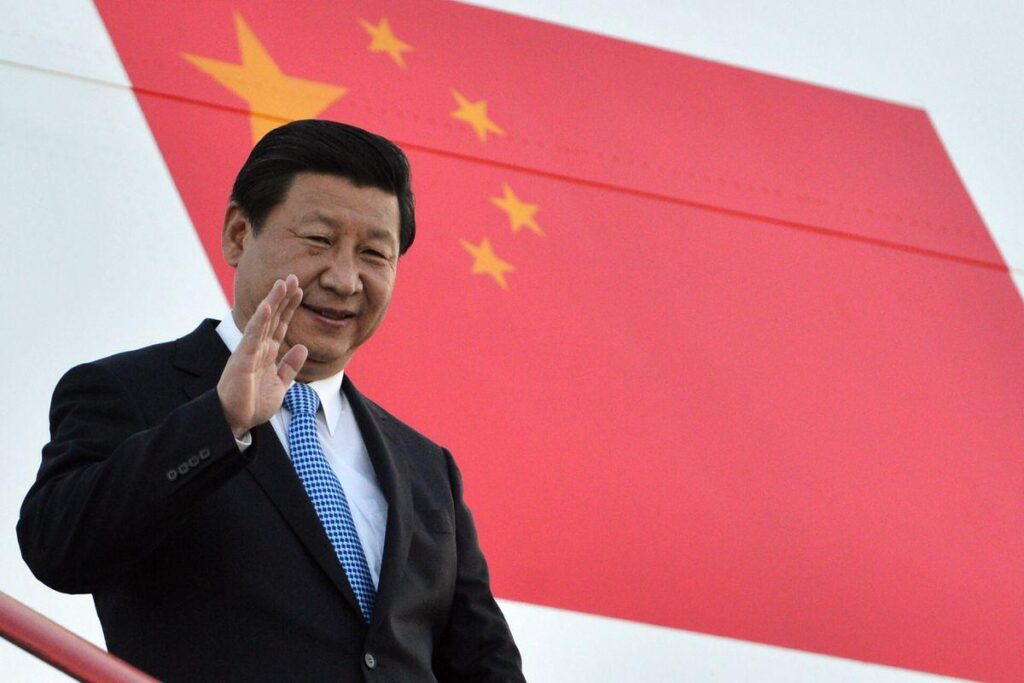
Introduction: Who Is Xi Jinping?
Xi Jinping is the most powerful Chinese leader since Mao Zedong. As General Secretary of the Chinese Communist Party (CCP), President of the People’s Republic of China, and Chairman of the Central Military Commission, he sits at the core of China’s political system.
Understanding Xi Jinping is essential to understanding modern China — not just its politics, but its economic priorities, social governance, foreign policy, and long-term national vision. Unlike technocratic leaders of earlier decades, Xi has centralized authority, revived ideology, and reshaped the CCP’s role in everyday life.
Early Life and Political Background
During the Cultural Revolution, Xi Jinping was sent to the countryside as a “sent-down youth”, living and working in rural Shaanxi province. This experience is frequently referenced in official narratives as shaping his political resilience and understanding of grassroots China.
After studying chemical engineering at Tsinghua University, Xi entered party politics, working his way up through provincial leadership roles in Fujian, Zhejiang, and Shanghai. Unlike some elite politicians, his rise followed the traditional CCP ladder, building administrative experience over decades.
Rise to Power
Xi Jinping became General Secretary of the CCP in 2012, taking over a party facing widespread corruption, slowing economic growth, and growing public cynicism.
One of his first major moves was a sweeping anti-corruption campaign. Officially framed as a moral and institutional cleanup, it targeted both “tigers and flies” — high-ranking officials and low-level cadres alike. Critics argue it also served to eliminate political rivals, while supporters see it as restoring party discipline.
By 2018, term limits on the presidency were removed, allowing Xi to remain in power indefinitely. This marked a decisive break from the post-Mao norm of collective leadership and orderly succession.
Xi Jinping Thought and Ideology
At the core of Xi’s leadership is “Xi Jinping Thought on Socialism with Chinese Characteristics for a New Era.” This ideology is now written into the Chinese constitution and taught across schools, universities, and party institutions.
Key themes include:
strengthening CCP control over society
national rejuvenation and historical destiny
state-led economic development
technological self-reliance
political stability over liberalization
Unlike earlier reform-era leaders who emphasized economic growth while downplaying ideology, Xi has re-centered political loyalty and Marxist language as governing tools.
Domestic Governance and Policy Direction
Under Xi Jinping, China’s governance model has shifted noticeably.
Politically, power has become more centralized, with decision-making concentrated in party-led commissions. Surveillance technologies, data governance, and legal mechanisms are used to maintain social stability.
Economically, Xi supports markets but rejects Western-style liberal capitalism. The state plays a stronger role in strategic sectors such as technology, energy, and finance. Campaigns against major tech companies reflect an effort to assert political authority over private capital.
Socially, the government promotes traditional values, nationalism, and demographic policies aimed at addressing China’s aging population and declining birth rates.
Foreign Policy and Global Impact
Xi Jinping has significantly reshaped China’s global posture. His administration promotes a more assertive foreign policy, emphasizing sovereignty, security, and China’s right to shape global norms.
Signature initiatives include:
the Belt and Road Initiative
expanding China’s influence in international institutions
closer ties with the Global South
strategic competition with the United States
While supporters argue this reflects China’s rightful global status, critics see rising tensions, especially in the South China Sea, Taiwan Strait, and technology trade.
Criticism and Support
Xi Jinping is a polarizing figure.
Supporters credit him with restoring party discipline, reducing corruption, strengthening national pride, and giving China strategic direction in a turbulent world.
Critics argue that increased censorship, political repression, and weakened institutional checks create long-term risks for China’s governance and innovation.
Importantly, public discourse inside China differs significantly from international commentary, shaped by media controls and political context. Understanding Xi Jinping requires acknowledging both domestic legitimacy and external criticism.
This balance is important for credibility — and for avoiding “one-sided” content flags.
Conclusion: Why Xi Jinping Matters
Xi Jinping is not just a Chinese leader; he is a defining figure of 21st-century global politics. His leadership marks a clear shift away from the post-Mao reform consensus toward a more centralized, ideological, and state-driven model.
For anyone interested in China’s future — economically, politically, or culturally — understanding Xi Jinping is essential.