Mao Zedong: The Man Who Shaped Modern China
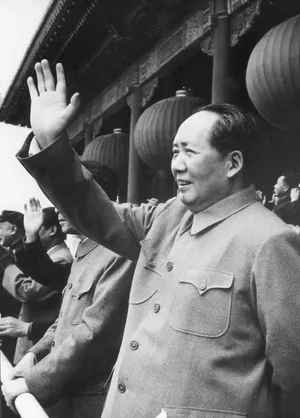
Mao Zedong (1893–1976), also known as Chairman Mao, was the founding leader of the People’s Republic of China (PRC) and one of the most influential political figures of the 20th century. As a revolutionary strategist, ideological thinker, and leader of the Chinese Communist Party (CCP), Mao reshaped China’s political system and national identity.
To understand modern China, Mao cannot be viewed solely through the lens of his policy outcomes. His leadership emerged from a period marked by imperial decline, civil war, and foreign invasion, and his ideas continue to influence China’s political culture, historical narrative, and state legitimacy.
Early Life and Rise to Power
Mao was born in 1893 in Shaoshan, Hunan Province, into a rural family at a time when China was experiencing political collapse and foreign pressure. His early education exposed him to Confucian classics, but he later rejected traditional hierarchies in favor of revolutionary change.
Mao’s rural background deeply influenced his political worldview. Unlike many Marxist theorists who focused on urban industrial workers, Mao believed China’s vast peasant population could serve as the primary revolutionary force. This interpretation of Marxism was shaped by China’s social realities rather than European industrial conditions.
By the 1920s, Mao had become an active member of the Chinese Communist Party. His emphasis on rural mobilization and guerrilla warfare gradually distinguished him within the party and laid the foundation for his rise to leadership.
The Long March and Civil War
The Long March (1934–1935) was a strategic retreat by communist forces fleeing Nationalist encirclement. Although it resulted in enormous losses, it became a defining moment in Mao’s rise to power.
Politically, the Long March elevated Mao’s authority within the CCP by demonstrating his strategic resilience and ability to maintain ideological unity under extreme conditions. It also helped create a shared revolutionary mythology that later became central to CCP legitimacy.
Following the Long March, Mao consolidated control over the party and its military forces. During the resumed civil war against the Kuomintang (Nationalist Party), communist forces gained popular support in rural areas. On October 1, 1949, Mao proclaimed the founding of the People’s Republic of China, marking the end of decades of internal conflict.
Mao’s Rule and Major Campaigns
After 1949, Mao faced the challenge of governing a vast, impoverished country emerging from war. His leadership was driven by a belief that political will and mass mobilization could rapidly transform China into a strong, self-reliant socialist state.
The Great Leap Forward (1958–1962) was launched to accelerate industrial and agricultural production through collectivization and decentralized manufacturing. Mao believed ideological commitment could compensate for technological and resource limitations. In practice, unrealistic production targets, poor planning, and suppressed criticism contributed to widespread famine and millions of deaths.
The Cultural Revolution (1966–1976) arose from Mao’s concern that revolutionary ideals were being undermined by bureaucracy and entrenched elites within the party. By mobilizing students and workers to challenge authority, Mao sought to reassert ideological control and prevent what he saw as capitalist restoration. While the movement disrupted existing power structures, it also led to social chaos, persecution, and long-term damage to education and governance.
Taken together, these campaigns reflect both Mao’s revolutionary ambition and the risks of centralized, personality-driven leadership. They remain central to debates about Mao’s historical role.
Mao Zedong’s Ideology
Mao Zedong developed a distinct interpretation of Marxism-Leninism adapted to China’s conditions, commonly referred to as Maoism. At its core, Maoism emphasized revolutionary struggle in agrarian societies, continuous political mobilization, and resistance to foreign domination.
Key elements of Mao’s ideology included the belief that class struggle continues even after a socialist revolution, and that ideological vigilance was necessary to prevent political stagnation. Mao also stressed self-reliance, particularly in response to China’s historical experience with imperialism.
Although China’s post-1978 reforms moved away from Maoist economic policies, Maoist symbolism and political language remain embedded in the CCP’s identity. His ideology is selectively preserved as part of the party’s historical narrative rather than as a governing blueprint.
Want to understand more about Chinese philosophy and thought? Visit our Chinese Culture section.
Mao’s Legacy in Modern China
Mao Zedong’s legacy occupies a complex position in contemporary China. Officially, the Chinese Communist Party describes his record as “70 percent correct, 30 percent mistaken,” acknowledging serious policy failures while affirming his foundational role in establishing the modern Chinese state.
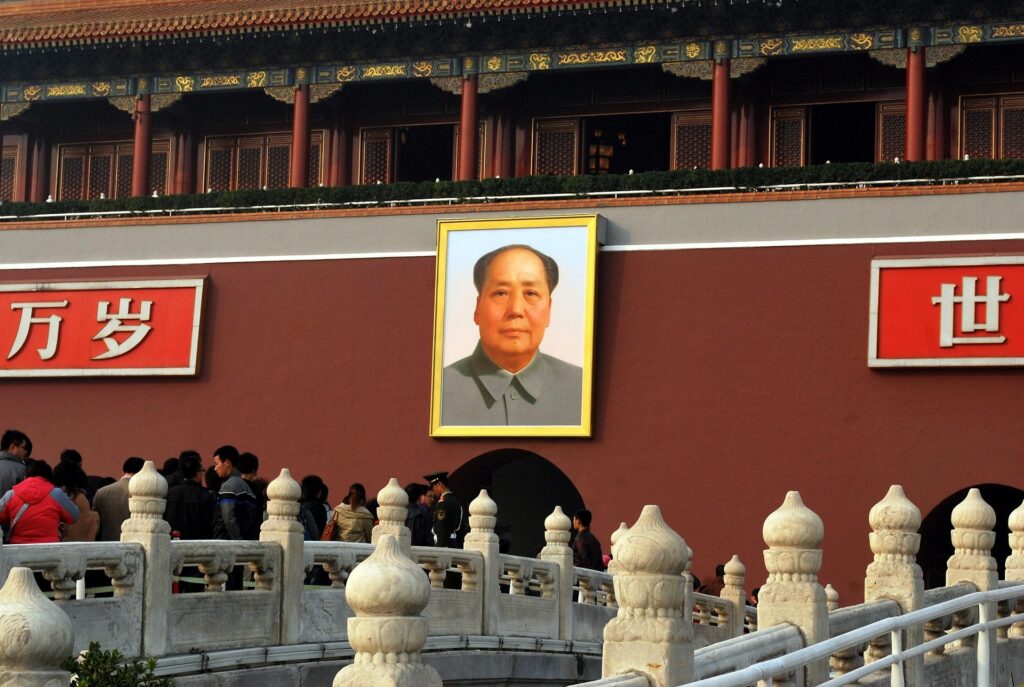
Domestically, Mao is remembered primarily as a symbol of national unity, sovereignty, and revolutionary legitimacy. His image remains prominent in state symbolism, including Tiananmen Square, even as China’s political and economic systems have evolved significantly.
Internationally, assessments of Mao tend to focus more heavily on the human cost of his campaigns and the authoritarian nature of his rule. Understanding Mao’s legacy requires recognizing both the historical context in which he governed and the differing perspectives shaped by political, cultural, and academic frameworks.
Final Thoughts
Mao Zedong was one of the most influential — and controversial — leaders of the 20th century. To understand modern China, it is impossible to ignore Mao’s role in shaping its society, politics, and identity.